
Please select the date and time you would like to check
EdgeTech+WEST2026 Conference 7/23 (Thu)
EdgeTech+WEST2026




Conference 7/23 (Thu)
基調講演
Keynote Speech
7/23/2026 (Thu) 10:00 ~ 10:45K1-01Room2・3
7/23/2026 (Thu) 11:15 ~ 12:00K1-02Room2・3
Bringing AI to the Factory Floor with AWS: Transforming Manufacturing through Physical AI and AI-Driven Development
As manufacturers face labor shortages and fluctuating demand, AI adoption on the factory floor is accelerating. The next step is to bring the capabilities of rapidly advancing AI to manufacturing environments. Implementing Physical AI requires an architecture that places workloads appropriately across the edge and cloud according to site-specific requirements. It also requires the engineering capabilities to turn that architecture into working systems.
In this session, we will introduce Amazon’s own implementations, customer examples of Physical AI built on AWS, and demos presented at AWS Summit Japan 2026. Through these examples, we will explain the overall landscape of Physical AI and the respective roles of cloud and edge. We will also explore how AI-driven development, which generates code from specifications, is transforming embedded software development and share practical first steps for starting small.
This session is intended for anyone interested in implementing Physical AI or shortening development cycles.
Amazon Web Services Japan G.K.
Automotive & Manufacturing Solutions Dept. 2, Strategic Enterprise Division, Technology Business UnitSolutions ArchitectSawa Ryota
7/23/2026 (Thu) 13:00 ~ 13:45K1-03Room2・3
ヒートアップセッション
Heat-Up Session
7/23/2026 (Thu) 11:00 ~ 12:30HU1-01Room8
AI駆動型開発~生成AIの開発現場への活かし方~ AI kudō-gata kaihatsu ~ seisei AI no kaihatsu genba e no ikashi-kata ~ 24 AI-Driven Development: How to Leverage Generative AI in Development Workflows
Promoting the use of AI has been identified as a key national policy. However, amidst the rapid evolution of generative AI, practitioners in embedded system development face the challenge of determining how best to integrate this technology into their workflows. This panel offers insights into utilizing generative AI in development environments, while also considering how actual development processes will evolve alongside the medium- to long-term advancement of the technology.
By bringing together experts from industry and academia to discuss the application of generative AI from diverse perspectives—covering the entire lifecycle from requirements development to design, implementation, and testing—the panel aims to provide practical ideas for its implementation in real-world development.
7/23/2026 (Thu) 13:00 ~ 14:00HU1-02Room8
Kansai AI Festival! “What Really Matters in Physical AI — What Should Kansai Businesses Do Now?”
Do You Really Understand Physical AI?
Is Physical AI simply about introducing robots? Is it just automation that replaces human work with machines? Is it enough to place robots in factories and warehouses? If you think “Physical AI = robots” or “Physical AI = automation,” that understanding may be dangerously wrong.
This session will introduce the latest global trends in Physical AI, the evolution of humanoids and robotics, overseas examples, and the future in which AI moves into the real world. We will then revisit the fundamental question: what is the true essence of Physical AI?
What truly matters is not the robot itself. It is the entire site where the robot works: factories, warehouses, logistics centers, buildings, equipment, human movement, material flow, safety zones, and responses to abnormal situations. The key is how we turn these realities into data, understand them, simulate them, and bring the results back into the real world.
So what matters beyond automation? Why are real-world site datasets necessary? How do digital twins connect with Physical AI, and why is simulation indispensable?
Kansai has manufacturing, pharmaceuticals, energy, logistics, food, chemicals, parts processing, and many other industries that could become major battlegrounds for Physical AI. Knowing global trends is not enough. What should we observe, collect, and prepare in our own sites and businesses? This session will offer practical hints for that next step.
EmplifAI Co., Ltd.
Hiroyuki Osone
7/23/2026 (Thu) 14:30 ~ 16:30HU1-03Room8
[Panel Session] Kansai AI Festival! “PhysicalAI: We’ve Already Given It a Try”—The Reality of PhysicalAI as Told by Practitioners
As Physical AI rapidly evolves around the world, what is already possible in Japan, and what is still beyond reach? Robotics, AI, real-world site data, simulation, digital twins, autonomy — while these words spread quickly, what does Physical AI truly mean when applied to real-world sites?
In this panel session, practitioners at the forefront of Physical AI in Japan will discuss its current state and future. What is progressing in research and development? Where are the barriers to business implementation? What should Japanese companies start preparing for now?
This is neither blind hype nor detached skepticism. It is a panel session to understand where Physical AI in Japan truly stands, and to think about what comes next.
[Moderator] Tsuukai Technology Co., Ltd. / Representative Director / Yoshihiko Sugimoto
[Panelist] Microsoft Japan Co., Ltd. / Customer Success Account Manager / Naoki Kobayashi
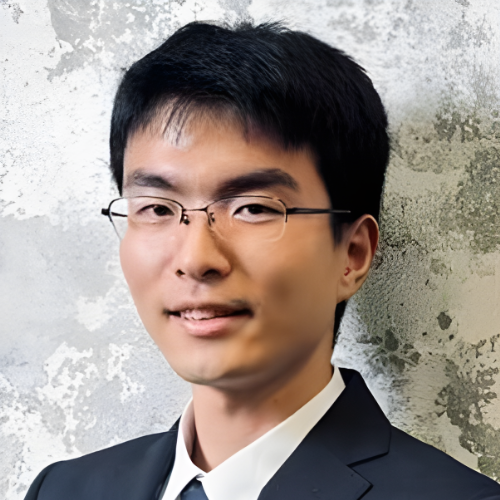
【Panelist】Takebishi Co., Ltd. / Original Product Development Section, Solution Development Department / Assistant Manager / Kengo Nakauchi
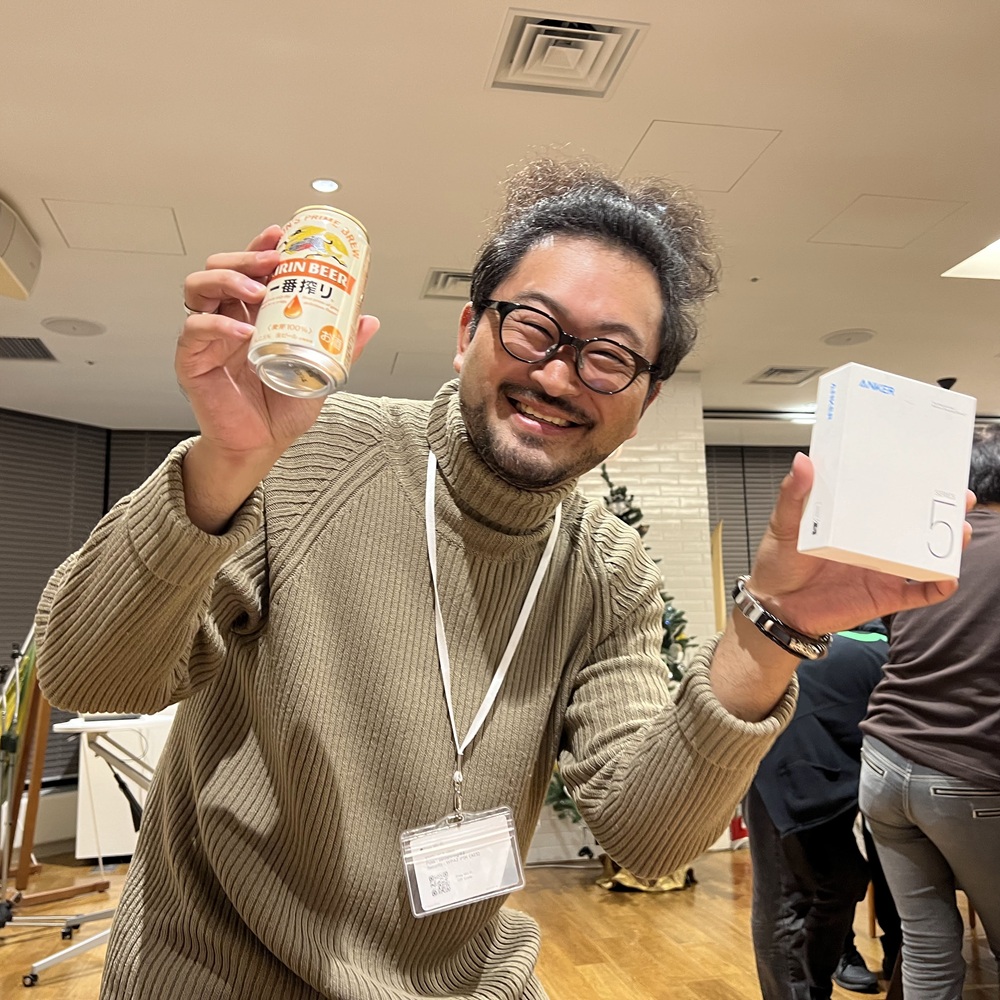
【Panelist】EmplifAI Co., Ltd. / President and CEO / Hiroyuki Ozone
【Panelist】Tsuikai Technology Co., Ltd. / Director and “Tsuikai Master” / Masaya Tanaka
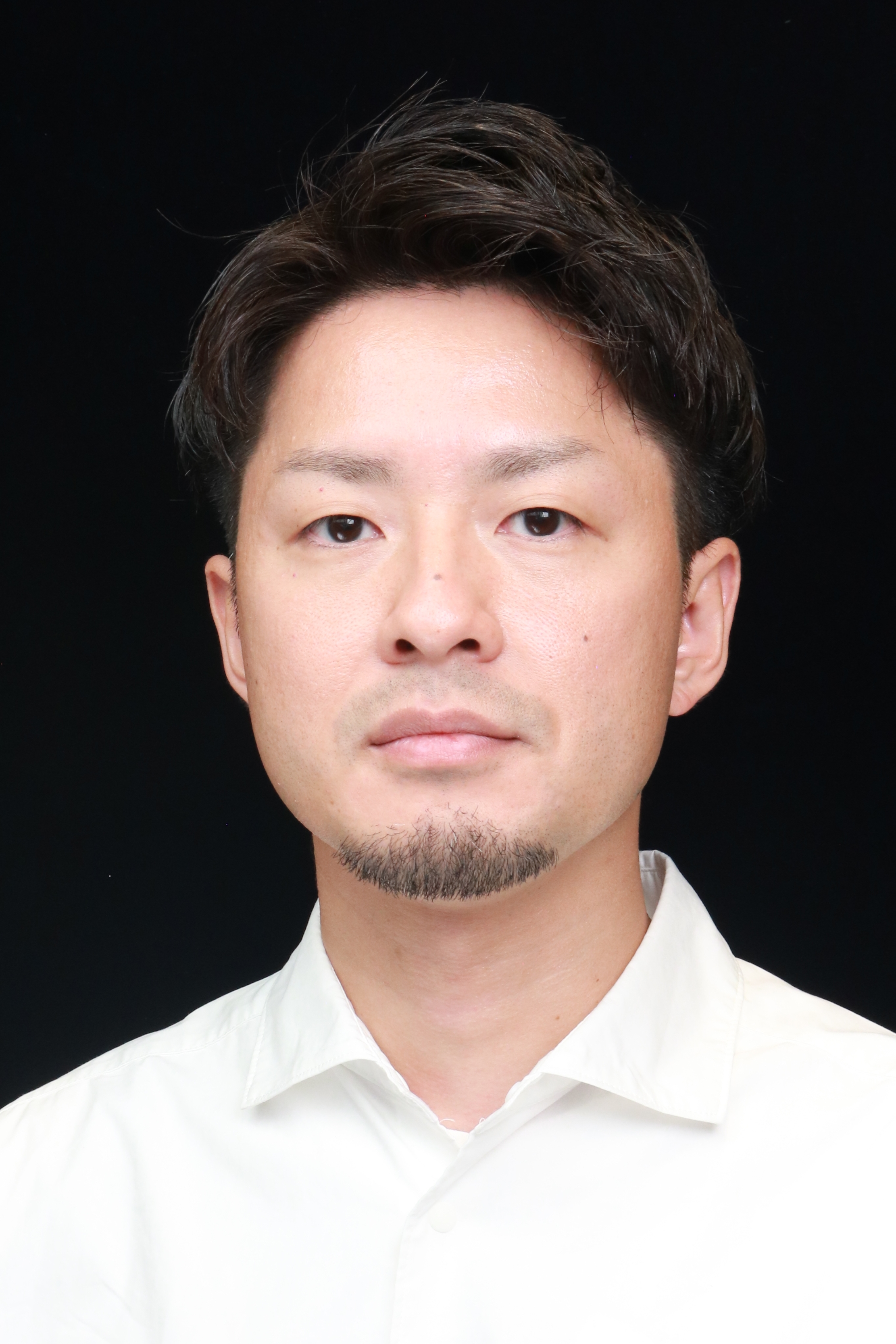
【Panelist】Kyoto University / Faculty of Economics, KUPAC / Representative / Hiromasa Osawa
TAKEBISHI Co.
SOLUTION DEVELOPMENT DEPARTMENTCHIEFKengo Nakauchi
KUPAC
DirectorKousei Osawa
EmplifAI Co., Ltd.
Hiroyuki Osone
Microsoft Japan Co., Ltd.
Customer Success Account Delivery DepartmentCustomer Success Account Manager Naoki Kobayashi
TSU-X Co., Ltd.
Developer DepartmentMaster of HumorMasaya Tanaka
テクニカルセッション
Technical Session
7/23/2026 (Thu) 10:00 ~ 11:00TS1-01Room1
Keio University
Graduate School of System Design and ManagementDean/ProfessorSeiko Shirasaka
7/23/2026 (Thu) 13:00 ~ 14:30TS1-02Room1
7/23/2026 (Thu) 15:15 ~ 16:15TS1-03Room1
Making Semiconductor Design More Accessible: New Approaches to Talent Development via OpenSUSI-MPW and RISE-A
One of the greatest barriers to training semiconductor design talent lies in the constraints imposed by NDAs and information-sharing restrictions. In many cases, the requirement for an NDA to access Process Design Kits (PDKs) makes it difficult for students and researchers to freely learn and share designs in educational and prototyping settings. This has been the fundamental obstacle hindering the expansion of the semiconductor talent pool.
OpenSUSI-MPW addresses this challenge by utilizing the NDA-free, open-source PDK for Tokai Rika’s 1µm process. This environment enables individuals to design, share their work openly, and experience actual chip fabrication (tape-out).
In this presentation, we will introduce the mechanics of open PDKs and MPW shuttles, as well as the design submission workflow based on GitHub. Furthermore, we will highlight the growing talent development ecosystem fostered in collaboration with RISE-A. By engaging technical colleges (KOSEN), universities, and regional industries, we will present a practical, hands-on development model that moves beyond mere "learning" to actual "making," illustrated with concrete success stories.
Hiroki Masuda
Atmark Techno Inc.
CEOTomohiro Saneyoshi
OpenSUSI/ISHI-Kai
Noritsuna Imamura
出展者セミナー
Exhibitor Seminar
7/23/2026 (Thu) 11:30 ~ 12:15E71-01Room7
Preparing for the EU CRA: Practical SBOM, VEX, and Vulnerability Management Strategies
The EU Cyber Resilience Act (CRA), which entered into force in December 2024, establishes new cybersecurity requirements for digital products placed on the EU market. The regulation requires organizations to maintain security and accountability throughout the entire product lifecycle and may impact not only products sold directly in Europe but also organizations indirectly involved through global supply chains.
Beyond vulnerability remediation, the CRA requires manufacturers to continuously identify, monitor, and manage software components and vulnerability information while demonstrating effective governance and transparency.
In this session, we will review the objectives and key requirements of the CRA and discuss practical strategies for achieving compliance, including SBOM generation and maintenance, ongoing vulnerability management, and the use of VEX to communicate vulnerability impact assessments. We will also introduce realistic approaches to software supply chain risk management that help organizations meet CRA requirements efficiently and sustainably.
Black Duck Software G.K.
Sales EngineeringSales EngineerYuki Okada
7/23/2026 (Thu) 13:00 ~ 13:45E71-02Room7
Edge Security 3.0: From Compliance to Value Creation Leveraging embedded security technologies to enhance product value and create new business opportunities.
Are your security investments creating business value?
As compliance with the EU Cyber Resilience Act (CRA) becomes increasingly important, many development and QA teams continue to view security as a regulatory requirement. Yet leading organizations are turning security into a powerful differentiator that enhances product value and creates new business opportunities.
In this seminar, we will explore how to evolve from "Edge Security 1.0"—focused on protection—to "Edge Security 3.0"—focused on value creation. Through practical examples using evaluation and analysis tools, attendees will learn how security can drive business growth. The session will also cover the latest developments in Post-Quantum Cryptography (PQC) and strategies for addressing next-generation cybersecurity threats.
Join us to discover how security can become a source of competitive advantage rather than simply a cost of compliance.
7/23/2026 (Thu) 15:00 ~ 15:45E71-04Room7
CRA Takes Effect in September: A Guide to Vulnerability Maintenance for Embedded Operating Systems
The partial implementation of the “EU Cyber Resilience Act (CRA)” is just around the corner, set to begin in September 2026.
The CRA is a law that applies to many products containing digital components sold in the EU, requiring compliance with various security requirements to counter the ever-increasing number of cyberattacks.
In this session, we will introduce the latest developments regarding the CRA and its security requirements, as well as vulnerability management methods for embedded operating systems and solutions designed to support CRA compliance.
7/23/2026 (Thu) 11:30 ~ 12:15E11-01Room10
Making Embedded Linux Secure for CRA/JC-STAR! An Introduction to EMLinux
With IoT security laws and regulations being strengthened worldwide—such as the EU's Cyber Resilience Act (CRA) and Japan's JC-STAR—manufacturers are required not only to ensure secure configurations at the time of shipment, but also to provide a "rapid and continuous response" to vulnerabilities discovered on a daily basis.
In this seminar, we will introduce "EMLinux," a commercial embedded Linux provided by Cybertrust that encompasses ultra-long-term support, SBOM generation, and highly accurate vulnerability scanning. We will propose solutions that strongly support your regulatory compliance throughout the entire product lifecycle.
Cybertrust Co., Ltd.
Hirotaka Motai
7/23/2026 (Thu) 13:00 ~ 13:45E11-02Room10
7/23/2026 (Thu) 14:00 ~ 14:45E11-03Room10
The Road to JC-STAR ★1 and ★3 Certification
When it comes to obtaining JC-STAR certification, many professionals in charge feel anxious due to the many unknowns surrounding the specific requirements, documentation, and testing involved.
In this session, key experts from Cybertrust—leveraging an extensive track record in supporting IoT security standards and providing assistance for JC-STAR compliance—will explain the organizational preparations required for JC-STAR certification, the specific functional requirements for obtaining JC-STAR ★1 and ★3, and the actual device testing processes.
Dairo Toyoshima